A foundation costs $6 to $50 per square foot depending on type, according to HomeGuide, and the right choice for a given site is decided far more by soil conditions, water table, and frost line than by personal preference. A standard 2,000 square foot concrete slab runs $12,000 to $28,000. The same size basement runs $70,000 to $100,000 or more. That is too large a gap to pick on style alone, and in a lot of the country the decision is closer to already made for you once the site is understood.
Concrete slab
A concrete slab foundation costs $6 to $14 per square foot, or roughly $12,000 to $28,000 for a 2,000 square foot home, according to HomeGuide. It is the least expensive foundation type, requires no deep excavation, and needs relatively little long-term maintenance when a proper vapor barrier is installed.
Slabs are most common in warmer or temperate climates, on relatively flat ground, and in regions with a shallow frost line, since there is no crawl space or basement depth requirement driving the foundation deeper into the ground. This is the default foundation across large parts of the South and Southwest for exactly that reason.
Crawl space
A crawl space foundation costs $15 to $18 per square foot, or $30,000 to $36,000 for 2,000 square feet, according to HomeGuide. It requires more excavation and perimeter wall construction than a slab, which is why it costs more, but it buys easier access to plumbing and ductwork for future repairs.
Crawl spaces are more common in warmer regions without a deep frost line, and they work well on sloped lots and in flood-prone areas where lifting the living space above grade matters. The tradeoff is moisture management. A poorly ventilated or poorly sealed crawl space is one of the more common sources of mold, mildew, and pest problems in a home, which is why many contractors in colder or wetter climates recommend a full basement over a crawl space when the budget allows it.
Basement
A basement foundation costs $35 to $50 or more per square foot, or roughly $70,000 to $100,000 for a 2,000 square foot footprint, not including finishing the interior, according to HomeGuide. It is the most expensive foundation type by a wide margin, but it is also the only one of the three that adds meaningful square footage to the property, sometimes doubling the usable space on the same building footprint.
Basements are most common in areas with cold winters, since building below the frost line to prevent frost heave is required there regardless of whether a basement is wanted for the extra space. In much of the northern half of the country, a basement or a deep frost-protected foundation is close to unavoidable. In much of the South, it is closer to optional and driven by preference for the extra space rather than by climate necessity.
How soil, water table, and frost line actually decide it
Frost line depth is the reason basements are common in the North and rare in the South. Any foundation has to extend below the frost line to avoid frost heave damage, and in cold climates that depth is deep enough that building out a full basement while you are already excavating that far down is often a smaller incremental cost than it would be starting from a shallow slab.
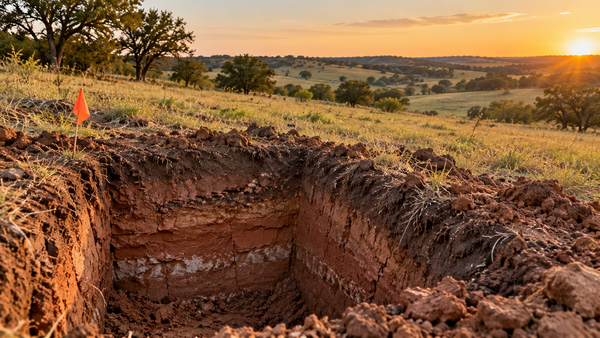
A high water table pushes the decision the other direction, toward a slab or crawl space, since a basement below a high water table fights constant hydrostatic pressure and moisture intrusion that is expensive to manage correctly. Soil type factors in similarly: expansive clay soils that shrink and swell with moisture can crack a slab that is not engineered for it, which sometimes tips the decision toward a pier and beam or crawl space foundation that isolates the structure from direct ground movement.
None of this is a decision to make from a floor plan alone. A soil test and a conversation with a local foundation contractor about the water table and frost depth on your specific site will settle the question faster than any amount of researching foundation types in the abstract.

What this means for your plan
Every Fry Design Co. plan can be engineered for the foundation type that fits your site, whether that means adapting a plan drawn for a slab to work on a basement, or the reverse. Book a design consultation once you know what your site's soil and water table look like, and we can make sure the plan matches the ground it is going on.
Frequently asked questions
What is the cheapest foundation for a house?
A concrete slab, typically $6 to $14 per square foot, according to HomeGuide. It requires no deep excavation and works best in warmer climates with a shallow frost line and relatively flat, stable soil.
Is a basement worth the extra cost?
Often yes if the region already requires deep excavation for frost protection, since the incremental cost of finishing out a basement at that point is smaller than building one from scratch. It is a bigger optional expense in warmer climates where a shallow foundation is already code-compliant.
Why are basements more common in cold climates?
Foundations in cold climates must extend below the local frost line to prevent frost heave damage regardless of foundation type, and once excavation reaches that depth, building out a full basement is often a comparatively smaller incremental cost than starting from a shallow foundation.
Can a high water table rule out a basement?
Yes, or at minimum make it significantly more expensive, since a basement below a high water table requires additional waterproofing and drainage engineering to manage constant hydrostatic pressure and moisture intrusion.
How do I know which foundation is right for my lot?
A soil test combined with a conversation with a local foundation contractor about your site's specific water table and frost line depth is the only reliable way to answer this. Foundation type should be confirmed against your actual site, not chosen from a general preference.