Short answer: Legal access means a recorded right to get from a public road to your land, not just a path you can drive today. In Oklahoma, check for road frontage, any access easement in the title, and section-line rights-of-way before you buy. Your survey and title commitment should show all three, and your house needs to sit clear of them.
People fall in love with a piece of land from the road. The gate is open, there is a gravel track to a nice rise, and nobody asks how they will legally get to it. Then the title work comes back, and the track crosses a neighbor's pasture with no recorded right to use it. Access is one of the first things I would check on any rural tract, because without it, nothing else about the land matters.
What does legal access actually mean?
There is a difference between being able to reach your land and having the right to. Legal access usually comes one of two ways:
- Frontage on a public road. The property line touches a road the county or state maintains.
- A recorded access easement. A written right to cross someone else's land, recorded with the county so it stays with the property when it sells.
A handshake with the neighbor is not access. Neither is an old ranch road nobody has complained about. Those arrangements can end when the neighbor sells, and a lender or the next buyer will want to see a recorded right.
What is a section-line right-of-way in Oklahoma?
This is the Oklahoma-specific piece, and it surprises a lot of buyers. Much of the state was surveyed in one-mile sections, and the lines between them carry a public right-of-way for roads.
Under Oklahoma law, section lines that the county commissioners or the Department of Transportation have opened and maintain for public use are public highways. Section lines that are not opened can be designated "reserved section lines" if the adjoining owners petition the county. While reserved, they are under the owners' control, but the county can revoke that status with 90 days' written notice when it intends to build a road.
How wide is it? In what was Oklahoma Territory, which includes the land around Guthrie and Oklahoma City, an 1890 federal law reserved public highways four rods wide between sections, with the section line as the center. Four rods is 66 feet, or 33 feet on each side of the line. In the eastern part of the state, which was Indian Territory, the history is different and the widths vary. Your surveyor will know which applies to your tract. Oklahoma's surveying standards require a boundary survey to show the width of any section-line rights-of-way adjoining or crossing the property.
Why does the section line matter for your house?
Because that strip can become a road. If your land borders an unopened section line, plan as if a road could be built there someday. On a design, I measure setbacks from the edge of that right-of-way, not from the fence line. A house, shop, or septic field placed inside the strip is a risk you do not need to take.
It can also help you. A section line that is already open as a county road may be your legal frontage.
What if the land is landlocked?
Oklahoma gives landlocked owners a path, but it is not a quick one. The Oklahoma Constitution generally bars taking private property for private use, with an exception for private ways of necessity. State law then lets a private person exercise eminent domain in like manner as railroad companies for private ways of necessity. In plain terms, you can go to court to condemn an access route across a neighbor's land, and you pay for it.
That means legal fees, compensation to the neighbor, and time, all before you can build. It is far better to buy land that already has frontage or a recorded easement. This is general information, not legal advice. If access to a tract is anything other than frontage on a maintained road, have an Oklahoma real estate attorney review it before you close.

What other easements affect where you can build?
Access is not the only easement that shapes a building site. Look for these in your title commitment and on your survey:
- Utility easements for power lines, water lines, or gas lines. You generally cannot build over them.
- Shared driveways. If you share a drive, get a recorded agreement that covers who maintains it and who pays.
- Drainage easements that keep water moving across the land.
Easements are separate from deed restrictions, which limit what you can build rather than where others can cross.
Do you need a permit for your driveway?
It depends on which road you connect to.
- State highways. The Oklahoma Department of Transportation controls driveway entrances onto state and federal-aid highways through a permit system. Its driveway application states that no work may be done on state highway right-of-way until an approved copy of the application is in hand.
- County roads. Call the county commissioner's office for your district before you cut in a drive. Ask whether a permit is needed and what size culvert should go under it.
Driveway length matters to your budget too. A long drive to a back-of-the-property house site is real money. Our post on what it costs to turn raw land into a buildable site covers it.
What should you check before you buy?
- Confirm frontage on a maintained road. Ask the county whether the road is county-maintained.
- Read the title commitment for recorded access easements and any exceptions.
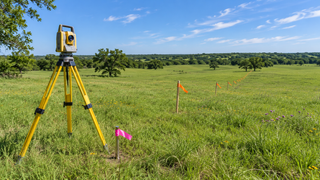
- Order a boundary survey that shows section-line rights-of-way and easements. Our post on whether you need a land survey before you build explains what to ask for.
- Ask about the driveway permit and culvert for the road you will connect to.
- Get shared access in writing and recorded.
- Call an attorney if access is anything but simple frontage.
Once access is settled, the house can be placed with confidence. At Fry Design Co, we fit every plan to its lot with the easements and rights-of-way in view, and we model the home in 3D so you can walk through it before anything is staked. Any Fry Design Co plan can be modified to fit your lot.
Building in Oklahoma? Fry Design Co can also build your home for you, with one team from plan to move-in. Explore our design and build services.
Frequently asked questions
What is a section line easement in Oklahoma?
It is a public right-of-way along the lines between one-mile survey sections. Section lines that the county or the Department of Transportation has opened and maintains for public use are public highways under Oklahoma law. Unopened ones can be reserved for the adjoining owners by county resolution.
How wide is a section line right-of-way in Oklahoma?
In former Oklahoma Territory, including central Oklahoma, federal law reserved highways four rods wide, or 66 feet, centered on the section line. Widths vary in the former Indian Territory. A boundary survey should show the width that applies.
Can I build a house on a section line?
You should not. A section line can be opened as a public road, and a reserved section line can return to public use with 90 days' notice. Place the house, shop, and septic field outside the right-of-way.
What can I do if my land is landlocked in Oklahoma?
Oklahoma law allows a private way of necessity through condemnation, which means a court process and paying the neighbor compensation. It is costly and slow. Talk to an Oklahoma real estate attorney, and when possible, buy land with frontage or a recorded easement.
Do I need a permit for a driveway in Oklahoma?
On a state highway, yes, through the Oklahoma Department of Transportation, and no work can start in the right-of-way until the application is approved. On a county road, call the county commissioner's office for your district about permits and culvert size.