A metal roof costs $500 to $1,600 per square installed and lasts 30 to 80 or more years, according to 2025 data from HomeGuide. An asphalt shingle roof costs $300 to $500 per square installed and lasts 15 to 30 years. On a nominal 2,000-square-foot roof — 20 squares — that works out to roughly $10,000 to $32,000 for metal and $6,000 to $10,000 for asphalt shingles. Metal costs more upfront and roughly two to three times as much to install as shingles, and it also lasts roughly two to three times as long. Whether that trade pays off depends on how long you plan to own the house, which is the question this article actually answers.
The cost, side by side
-
Metal roof: $7,500 to $40,000 installed, or roughly $5 to $16 per square foot
-
Asphalt shingles: $5,700 to $12,000 installed, or roughly $3 to $5 per square foot
-
Metal roof lifespan: 30 to 80 or more years
-
Asphalt shingle lifespan: 15 to 30 years
On a straight upfront comparison, shingles win every time. On a cost-per-year-of-roof-life basis, the picture changes considerably, and often reverses, which is the calculation most articles skip.
Running the thirty-year math
Take a 2,400 square foot roof as an example. A metal roof toward the middle of its range might run around $20,000 installed and last 50 years, working out to roughly $400 a year of roof. An asphalt shingle roof might run around $9,000 installed and last 20 to 25 years, meaning a homeowner in that same 30 year window is likely paying for the shingle roof twice, once at installation and again around year 20 to 25, for a total closer to $18,000, or roughly $600 a year.
Those are illustrative numbers built from the ranges above, not a quote for any specific house, and your real numbers will depend on roof complexity, material grade, and region. The mechanism is the point: a roof that needs replacing once in thirty years usually beats a roof that gets replaced twice, even though the second roof is cheaper each time you buy it.
Where the math tilts back toward shingles
This calculation favors metal most clearly for someone who plans to own the house for decades. If you are building to sell within five to ten years, the second shingle replacement never happens on your watch, and the lower upfront cost of shingles is harder to beat. Roof choice is genuinely a different decision for a forever home than for a near-term sale.
Is a metal roof actually worth it?
Metal roofs are worth the cost for homeowners seeking long-term savings and return on investment, according to HomeGuide, since metal lasts two to three times longer than asphalt shingles, improves energy efficiency, reduces heating and cooling costs, and requires minimal maintenance. Homes in heavy snow, high wind, and fire-prone regions see the highest return on a metal roof specifically, because those are the conditions where metal's durability advantage matters most.

The noise question, answered honestly
Metal roofs are not noisy when installed and insulated correctly, according to HomeGuide. That is a more useful answer than either extreme you usually hear. A metal roof installed directly over open framing with no solid decking or insulation underneath can transmit rain sound noticeably. The same roof installed over solid decking with proper insulation, which is standard residential practice, performs close to a shingle roof for interior noise.
The noise complaint you have probably heard about is almost always describing the first scenario, which is common on pole barns, shops, and outbuildings with open framing, not a properly built residential roof assembly. If you are covering a barndominium's living space, ask your builder specifically what is under the metal, solid decking and insulation should be part of the answer, not an upgrade.
Other real differences worth knowing
Metal roofs are excellent insulators and can potentially reduce insurance premiums, according to HomeGuide, due to their wind, fire, and insect resistance. They are also not hurricane-proof, despite the durability, and they carry a real disadvantage worth naming honestly: color matching for a future repair on an aging metal roof can be difficult, and thinner metal gauges can dent or show wear from expansion and contraction over time on exposed-fastener systems.
Metal roofs also do not interfere with Wi-Fi or cell service inside the house. Both signals originate from equipment inside the home or from outside towers, and a metal roof does not meaningfully change either.
How this plays out on a barndominium specifically
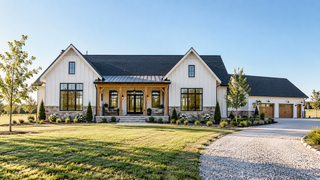
Metal is already the standard roofing material on most barndominium exteriors, which removes the cost comparison for buyers in that category and shifts the real decision to panel type and color rather than metal versus shingle at all. The Carnation 1 Plan is a live example of a low-pitch standing seam metal roof carried the length of the home, which is the panel style that tends to perform best for both noise and longevity among metal options.

See our most popular plans to see how roof style and pitch are handled across the current catalog.
Frequently asked questions
Is a metal roof cheaper than shingles in the long run?
Often yes, when measured over a full ownership timeline. Metal costs roughly two to three times more upfront but lasts roughly two to three times as long, so the cost per year of roof life is often comparable or lower for metal, especially for homeowners planning to stay in the home for decades.
How long does a metal roof actually last?
30 to 80 or more years, according to HomeGuide, compared to 15 to 30 years for asphalt shingles, depending on the metal type, climate, and maintenance.
Are metal roofs actually loud in the rain?
Not when installed correctly. Metal roofs installed over solid decking with proper insulation are not noticeably noisy. The loud metal roof most people picture is typically an open-framed structure like a shop or barn, not a properly built residential roof assembly.
Does a metal roof affect Wi-Fi or cell signal?
No. Wi-Fi signal comes from a router inside the home, and cell signal issues are almost always caused by distance from a cell tower rather than the roofing material.
Is a metal roof worth it if I plan to sell within a few years?
The long-term cost advantage of metal depends on owning the house long enough for it to outlast one or more shingle roof replacements. For a near-term sale, the lower upfront cost of asphalt shingles is harder for metal to beat.