The biggest insurance savings on a new Oklahoma home come from building to the FORTIFIED Home High Wind and Hail standard. Oklahoma law requires insurers to offer a discount for certified FORTIFIED homes when their own data supports one. Carriers have filed discounts of up to 42 percent on the wind portion of the premium. Roof choice, garage doors, and distance to a fire station matter too.
Most of these savings are decided on the plan. It costs far less to design a stronger roof and better openings than to retrofit them after the house is built.
Why is homeowners insurance so expensive in Oklahoma?
Wind and hail. Oklahoma sees frequent hail, tornadoes, and straight-line winds, and insurers price that risk into every policy. Many Oklahoma policies also carry a separate wind and hail deductible, often set as a percentage of the home's dwelling coverage rather than a flat dollar amount, according to Kin Insurance.
That percentage adds up quickly on a new custom home. On $500,000 of dwelling coverage, a 2 percent wind and hail deductible means you pay the first $10,000 of every wind or hail claim. A home that avoids damage in the first place saves you that deductible, not just the premium.
What is a FORTIFIED home?
FORTIFIED is a construction standard created by the Insurance Institute for Business and Home Safety (IBHS), a research group funded by insurers. It goes beyond standard building code to help a home resist high winds and hail. For the roof, the Oklahoma Insurance Department lists these upgrades:
- Enhanced attachment of the roof deck to the framing
- A sealed roof deck, so water stays out if shingles or panels are lost
- Locked-down roof edges
- Impact-resistant roof covering
- Wind- and rain-resistant attic vents
A certified FORTIFIED evaluator has to verify the work before a home earns its designation. On new construction, that is far easier to do while the roof deck is still exposed.
How much does a FORTIFIED home save on insurance in Oklahoma?
Under House Bill 1720, passed in 2017, insurers must offer a discount or rate reduction for new homes certified to the FORTIFIED High Wind and Hail standard, when the insurer finds it actuarially justified. Each company sets its own amount.
The Oklahoma Insurance Department has published discounts filed by major carriers for homes with a FORTIFIED High Wind and Hail roof designation:
|
Insurance company |
Filed discount on wind and hail premium |
|---|---|
|
National Security Fire and Casualty |
42% |
|
State Farm |
30% |
|
Union Mutual Insurance Company |
25% |
|
Goodville Mutual |
20% |
|
IDS Property Casualty |
20% |
|
Armed Forces Insurance Exchange |
15% |
|
Employers Mutual Casualty Company |
15% |
|
Shelter Insurance Company |
14% |
|
Foremost |
10% |
|
Nationwide Mutual Fire |
6% |
|
QBE Insurance |
3% |
Source: Oklahoma Insurance Department, based on 2018 FORTIFIED rate filings. Discounts vary by carrier and are subject to change.
The state also runs the Strengthen Oklahoma Homes program, which offers grants of up to $10,000 toward a FORTIFIED roof on owner-occupied primary residences. Check with the Oklahoma Insurance Department for the current application window.

Which roof is cheapest to insure in Oklahoma?
The roof drives more Oklahoma claims than any other part of the house, so it gets the closest look from insurers.
- Standing-seam and exposed-fastener metal panels are among the most hail-resistant roofing materials available. Hail usually has to exceed two inches in diameter to puncture or tear metal panels, according to IA Magazine. Smaller hail can still leave dents, so ask your agent whether the policy excludes cosmetic damage. Our Angelica and Hickory plans are both drawn with metal roofs.
- Impact-resistant shingles rated for hail are required for a FORTIFIED roof, and many insurers discount them on their own.
- Simpler rooflines have fewer valleys, hips, and penetrations where water can get in. Roof leaks in metal buildings often start at penetrations added after construction.
Our post comparing metal roofs and asphalt shingles covers the upfront cost and lifespan of each.
What else in the design lowers insurance risk?
- Wind-rated garage doors. In metal buildings, the overhead garage door is one of the most common wind weak points, according to Insurance Thought Leadership. If a large door fails, wind pressure inside the building can lift the roof. In Moore, a wind-rated garage door added about $400 to builds under the city's stronger code.
- Wall construction. Insulated concrete form (ICF) walls resist wind, fire, and impact better than wood framing, and some insurers recognize that. Our post on whether ICF homes are worth it covers the trade-offs.
- A safe room. It will not stop wind damage, but it protects your family. The state's SoonerSafe program offers a rebate of up to $3,000 on qualifying safe rooms. Our Oklahoma City custom home cost guide covers how to budget for one.
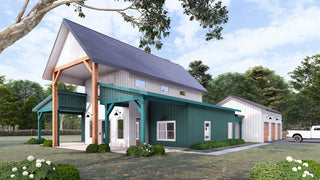
- Barndominium details. Insurers evaluate metal homes on more than the metal shell. Roof penetrations, insulation, and how the shop is used all affect how a barndo is classified and priced.
Does location affect what you pay?
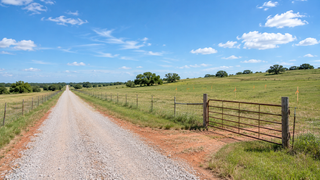
Yes, especially on rural land. Insurers use a fire protection rating from the Insurance Services Office (ISO) that grades local fire service on a scale of 1 to 10. Properties within five road miles of a fire station and close to a hydrant or water source get the best ratings. Properties more than five road miles from a responding fire station are generally assigned Class 10, the lowest, according to Santa Fe County's summary of ISO rules.
Before you buy acreage, measure the road distance to the nearest fire station and ask an agent for a quote on that address. The answer can change the land's true cost.
What should you ask your insurance agent before you finalize plans?
- Do you offer a FORTIFIED discount, and how much is it on the wind and hail portion?
- Is the wind and hail deductible a flat amount or a percentage?
- Does the policy exclude cosmetic hail damage to a metal roof?
- What roof covering do you rate best?
- Do you discount ICF walls or other storm-resistant construction?
- What fire protection class applies at this address?
Bring the answers to your designer. Book a design consultation and we will work the roof, openings, and structure into your plan so the savings are built in from the start.
Frequently asked questions
Does a FORTIFIED home lower insurance in Oklahoma?
Yes. Oklahoma law requires insurers to offer a discount for certified FORTIFIED homes when it is actuarially justified. The Oklahoma Insurance Department reports filed discounts of up to 42 percent on the wind and hail portion of the premium.
How much is the FORTIFIED discount in Oklahoma?
It depends on the insurer. Based on 2018 filings published by the Oklahoma Insurance Department, discounts ranged from 3 to 42 percent of the wind and hail premium. Ask your carrier for its current figure.
Is a metal roof cheaper to insure in Oklahoma?
Often. Metal panels resist hail well, and punctures usually take hail over two inches. Some policies exclude cosmetic dents on metal roofs, so confirm the policy terms before you choose.
What is a wind and hail deductible?
It is a separate deductible that applies only to wind and hail claims. In Oklahoma it is often a percentage of dwelling coverage. A 2 percent deductible on $500,000 of coverage is $10,000 per claim.
Does living far from a fire station raise insurance?
It can. Insurers use ISO fire protection classes from 1 to 10. Homes more than five road miles from a responding fire station are generally rated Class 10, which can raise premiums.