Yes, a well-designed barndominium can hold its value, but the steel frame is not what protects it. Value depends on three things: whether an appraiser can find comparable sales near you, whether the layout favors living space over shop space, and whether the home was built and documented like a house rather than a barn. Get those right and a barndo competes with any home on its road.
The question comes up for a good reason. Barndominiums are newer than most housing types, and the biggest hurdle owners report is the appraisal, not the building. Here is how a barndo is valued, why some come in low, and the design decisions that protect resale before construction starts.

Are barndominiums treated as real homes by lenders?
They are. Freddie Mac, one of the two agencies that set the rules for conventional mortgages, lists barndominiums by name as an eligible non-traditional property type. Fannie Mae does not name them, but its Selling Guide says unique housing types are eligible when the appraiser has enough information to develop a reliable opinion of market value.
That last condition is the whole game. Lenders want to know the home could sell on the open market for the loan amount. When an appraiser can support a value, the rest of the loan works much like it would on a traditional house, according to Mortgage Research Network.
How is a barndominium appraised?
Most homes are valued by comparing them with recent sales of similar homes nearby. That works well in a subdivision where three houses with the same floor plan sold last spring. It is harder when your home is the only barndo for miles.
Fannie Mae's guidelines do not require a comparable sale of the same design. When recent barndo sales are not available, an appraiser can lean on:
- Older sales of similar homes
- Sales in competing neighborhoods
- Other similar properties in the market area
- Traditional homes of similar size, adjusted for differences in materials, design, and demand
The more barndominiums that have sold near you, the easier this gets. Fairway Independent Mortgage suggests that buyers look in areas where barndos have caught on, because lenders and appraisers there are more familiar with them.
Why do some barndominiums appraise low?
Low appraisals usually trace back to features that make a home hard to compare, not to the barndo label itself. Mortgage Research Network gives an example: a two-bedroom barndominium with a 3,000-square-foot garage that is the only barndo within 100 miles. An appraiser has almost nothing to compare it with.
The common causes:
- Too much shop, not enough house. Layouts that put most of the square footage into garage or work space narrow the pool of buyers who will pay for it. Our post on shop with living quarters layouts covers how to keep shop space from crowding out the house.
- An unusual bedroom count. A home far below the bedroom and bath count typical for the area has fewer direct comparisons.
- Few local sales. In areas where barndos are rare, the appraiser has to reach further for data, and adjustments get less certain.
- Overbuilding for the location. Finishes and features well above the surrounding homes rarely appraise dollar for dollar, whatever the construction type.
What design choices protect a barndominium's resale value?
Most of what protects value is settled on the plan. These are the decisions we pay the closest attention to when designing a barndominium:

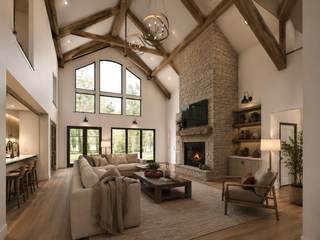
- Put the square footage where buyers will pay for it. A shop is a real asset in the country, but balance it against the living space. A future buyer is buying a house first. Plans like the Hickory and the Sycamore 1 put most of their square footage into living space.
- Match the bedroom and bath count to the market. A three- or four-bedroom layout gives an appraiser far more comparable homes to work with than a one-bedroom loft over a large shop.
- Design the exterior to read as a home. Covered porches, well-placed windows, and a clear front entry make a barndo compare naturally with nearby houses. Our post on barndominiums vs traditional homes compares how each holds up at resale.
- Plan for moisture and noise. Metal buildings need careful insulation and roof detailing. Roof leaks in metal homes often start at penetrations added after construction, and drywall ceilings can hide them for a long time, according to Insurance Thought Leadership.
- Check zoning and deed restrictions first. A home that does not meet local rules can be hard to finance, insure, or sell. Our post on how much land you need to build a house covers what to check before you buy.
- Keep the paperwork. Permits, inspections, and a complete plan set help an appraiser describe what was built. Fannie Mae requires appraisers to compare energy-efficient features with those of the comparable homes, so document insulation, windows, and HVAC.
A complete, builder-ready plan set does more than guide construction. It shows a lender and an appraiser exactly what is being built, which matters most when there are few local sales to point to.
Are barndominiums a good investment?
A barndominium can be a sound place to put your money when it is designed as a home, built where barndos are accepted, and sized for the local market. It is a riskier bet as a one-off design in an area with no similar homes, or as a building that is mostly shop, with a small apartment attached.
If resale matters to you, design for the next buyer as well as yourself. See our barndominium plans to compare layouts built around living space, with room for the shop you want.
Frequently asked questions
Do barndominiums hold their value?
A well-designed barndominium in an area where barndos are accepted can hold its value like other homes. Value depends most on comparable sales nearby, a layout that favors living space, and solid, documented construction.
Why do barndominiums sometimes appraise low?
Usually because the appraiser cannot find similar homes that have sold nearby. Very large shops, unusual bedroom counts, and finishes far above surrounding homes make that harder.
Can you get a conventional mortgage on a barndominium?
Yes. Freddie Mac lists barndominiums as an eligible non-traditional property type. Fannie Mae accepts unique housing types when an appraiser can develop a reliable opinion of value. Not every lender offers these loans, so ask early.
How do appraisers value a barndominium with no comparable sales nearby?
Fannie Mae allows appraisers to use older sales, sales in competing neighborhoods, and similar properties in the market area. Appraisers may also use traditional homes of similar size and adjust for differences.
Are barndominiums hard to sell?
They can be in areas where few exist, because the pool of buyers is smaller. Layouts that emphasize garage and shop space over living space can also narrow the market.