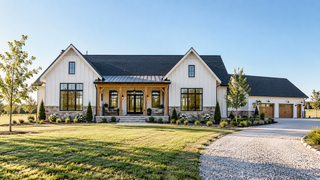
Building a house yourself, meaning acting as your own general contractor, can save you the general contractor's fee, which typically runs 10 to 20 percent of the total construction budget. That is real money, often tens of thousands of dollars on a typical build. It is also real time, and real risk shifted onto you. Here is an honest accounting of both sides, so you can decide with real numbers rather than a hope that it will work out.
What a general contractor's fee actually pays for
A general contractor's fee typically runs 10 to 20 percent of the total construction budget, according to HomeGuide, which works out to roughly $18,000 to $83,000 on an average house build. That fee covers overhead, profit, and a markup on materials and subcontractor labor. In exchange, the GC coordinates every subcontractor, schedules every inspection, carries the licensing and insurance that lets certain work get permitted at all, and absorbs the risk when something goes wrong.
When you act as your own general contractor, you are not eliminating that work. You are doing it yourself, which is where the real savings and the real time cost both come from.
What owner-building can realistically save
Most DIY builders save $50,000 to $150,000 on a typical home, according to HomeGuide, largely by eliminating the general contractor's markup and by performing some of the labor personally. On a 2,000 square foot build, that same source breaks down where the money actually goes: materials commonly run 55 to 65 percent of the total cost when self-managing, versus 25 to 30 percent when working through a contractor who is also marking up labor and coordination.
What you take on in exchange
This is the part that gets skipped in most articles that only talk about the savings.
Time. Building a house yourself commonly takes about twice as long as a professionally managed build, with timelines ranging from 12 to 30 months on average, according to HomeGuide, depending on complexity and how much time you personally have available. Weather, permit delays, and your own learning curve all extend that further.
Coordination. You become responsible for scheduling every subcontractor, sequencing every trade correctly, and making sure each one shows up when the previous one finished. A GC does this daily, across multiple projects, with existing relationships. You are doing it for the first time, on one project, with no existing relationships to lean on.
Liability and lender resistance. Serving as your own general contractor requires significant project management skill in addition to construction knowledge, and most municipalities will not issue certain permits, particularly electrical and plumbing, to an unlicensed individual. That means licensed subcontractors are still required for those trades regardless of how much else you take on yourself.
Financing friction. Owner-builder construction loans exist, but many lenders are more cautious about financing a build with no licensed general contractor of record, since the lender is taking on more risk that the project stays on schedule and on budget. Expect more paperwork, and expect to shop multiple lenders rather than assuming your regular bank offers this product.

What you should never do yourself
Foundation work, electrical installation, plumbing, and HVAC systems require professional expertise for safety and code compliance, according to HomeGuide, and most cities will not issue a permit for this work unless the person performing it is licensed. This is not a place to save money by taking on the work personally, even if you are otherwise comfortable managing the rest of the project.
The biggest mistakes owner-builders make
Underestimating costs and timelines is the most common error among owner-builders, according to HomeGuide, and hidden expenses, change orders, and the learning curve often push budgets 20 to 50 percent higher than the initial estimate.
Part of that gap comes from a cost most owner-builders don't see coming: subcontractors and suppliers price differently depending on who's asking. Subs give their best labor rates to general contractors because that relationship means steady, repeat work. A DIY builder is a one-off job with more perceived risk and no future projects attached, so subs often quote higher for the same work. Material suppliers operate the same way, extending discounts on building materials and fixtures to GCs that a first-time owner-builder usually can't access. The upshot is that the savings from skipping a GC's fee are rarely dollar-for-dollar — some of it gets absorbed by paying retail instead of contractor rates.
Build a substantial contingency into both your budget and your schedule before you start, not after something goes wrong.
Who should actually consider this
-
You have real, hands-on construction or project management experience, not just a general willingness to learn
-
You have significant available time, realistically measured in months, not weekends
-
You are comfortable being the single point of failure if a subcontractor no-shows or a delivery is late
-
Your timeline has real flexibility, since a 12 to 30 month build is the realistic range, not the exception
Who should not
-
You are on a fixed timeline, such as a lease ending or a sale closing on your current home
-
This is your first hands-on construction project of any kind
-
You do not have significant time available during normal business hours, when inspections and deliveries happen
-
The savings matter less to you than predictability and a fixed schedule
Where design fits into this decision either way
Whether you hire a general contractor or act as your own, a complete, detailed plan set is what makes the project biddable and schedulable in the first place. Subcontractors price and sequence their work off the plan, not off a verbal description of what you want, and that matters even more when you are the one coordinating them rather than an experienced GC.
If you are weighing owner-building against hiring a contractor, book a design consultation and we can talk through what a complete plan set does to de-risk either path.
Frequently asked questions
How much money can you really save by being your own general contractor?
Most owner-builders save 20 to 40 percent in labor costs, translating to roughly $50,000 to $150,000 on a typical home, according to 2026 data from HomeGuide. Actual savings depend heavily on which tasks you handle personally.
How much does a general contractor typically charge?
General contractor fees run 10 to 20 percent of the total construction budget, or roughly $18,000 to $83,000 on an average house build, according to HomeGuide.
What should an owner-builder never attempt personally?
Foundation work, electrical, plumbing, and HVAC installation require licensed professionals for both safety and code compliance, and most municipalities will not permit this work for an unlicensed individual.
How much longer does an owner-built home take?
Roughly twice as long as a professionally managed build, with typical timelines of 12 to 30 months, according to HomeGuide, depending on complexity and available time.
Is it harder to get financing as an owner-builder?
Often yes. Many lenders are more cautious financing a build without a licensed general contractor of record, which can mean more documentation and fewer lender options. Shop multiple lenders who specifically offer owner-builder construction loans.